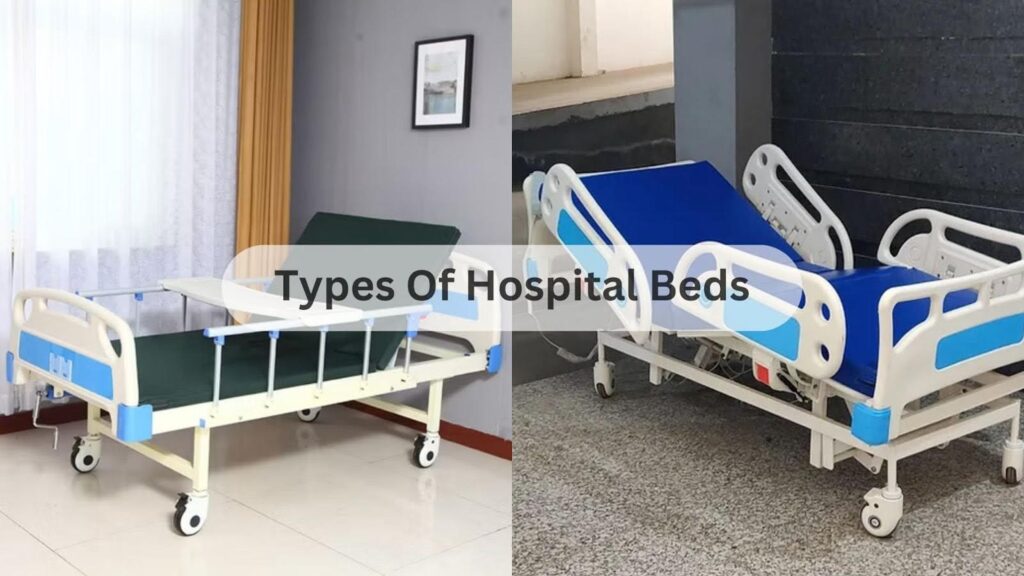

Patient recovery depends on many factors, but comfort and proper support play a very important role. Whether a patient is recovering from surgery, illness, injury, or managing a long-term condition, the type of hospital bed used can directly affect healing speed and comfort. This is where adjustable hospital beds become extremely important.
Unlike normal beds, adjustable beds allow patients to change their body position easily. Doctors and caregivers often recommend hospital beds for patient recovery because they improve comfort, reduce pain, and support better medical care. In this blog, we will explain why adjustable hospital beds are important, how they help recovery, and why they are widely used in hospitals and home care.
What Are Adjustable Hospital Beds?
Adjustable hospital beds are medical beds designed to move into different positions to support patient comfort and care. These beds allow the head, legs, and sometimes the full height of the bed to be adjusted according to patient needs.
These beds are also known as adjustable medical beds and are commonly used in hospitals, clinics, and home care settings. Most modern beds come with electric controls that make adjustments smooth and easy. Hospital beds with adjustable positions help patients sit up, lie down, or change posture without physical strain.
Why Patient Comfort Is Important for Recovery
Comfort is not just about feeling good it directly affects healing. When patients are uncomfortable, they experience more pain, poor sleep, and stress. All these slow down the recovery process.
Patient recovery beds are designed to reduce pressure on sensitive body areas, improve rest, and support proper posture. One of the major hospital bed adjustment benefits is that patients can change positions without pain or discomfort, which improves blood flow and reduces stiffness.
Benefits of Adjustable Hospital Beds for Patient Recovery
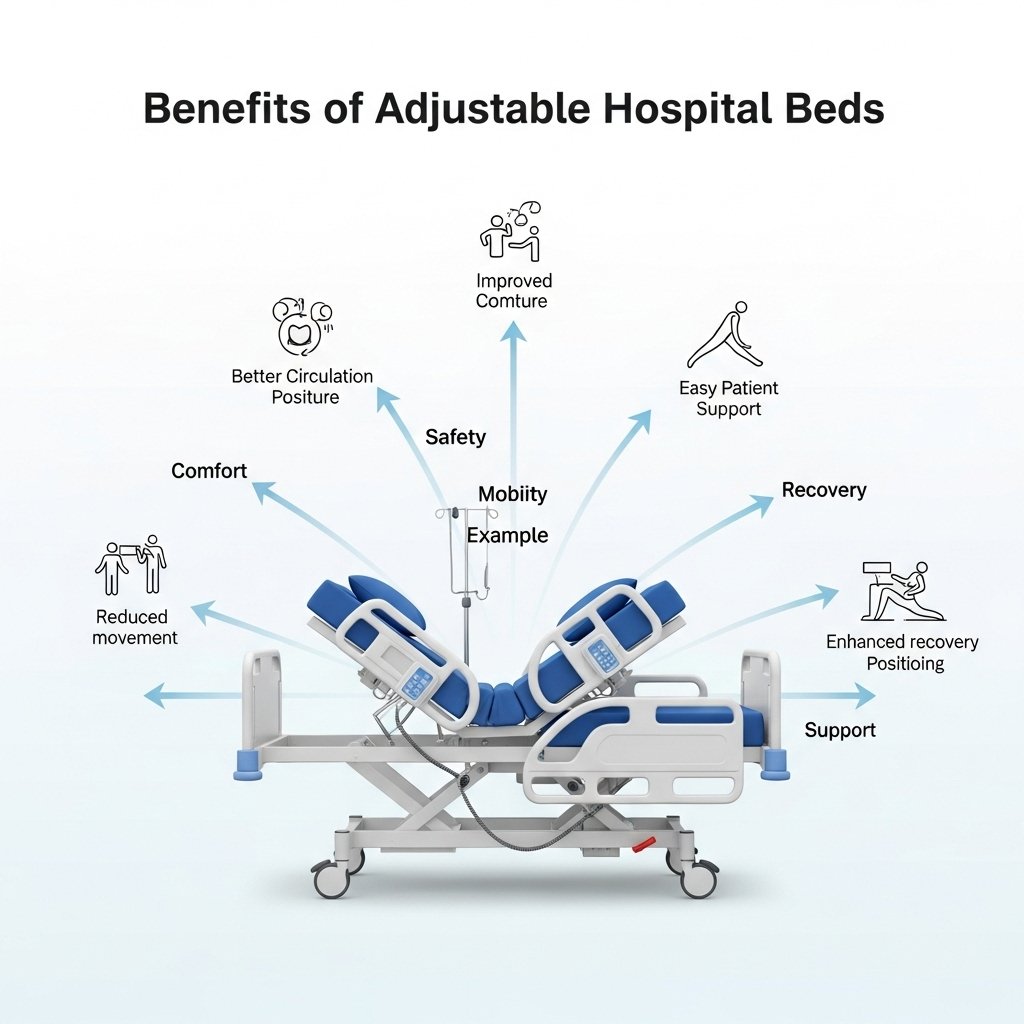
There are many benefits of adjustable hospital beds, especially for patients who need continuous care.
One major benefit is better body positioning. Adjustable beds allow patients to elevate their head or legs, which helps reduce swelling and improve breathing. This shows clearly how adjustable beds help patient recovery by supporting the body naturally.
Another benefit is pain management. Changing bed positions helps reduce pressure on the back, hips, and joints. Adjustable beds also help patients move easily, which improves confidence and independence during recovery.
Role of Adjustable Hospital Beds in Long-Term Care
Patients who need long-term treatment face different challenges. Staying in the same position for long hours can cause discomfort, bed sores, and poor circulation. This is why hospital beds for long-term care are designed to support frequent position changes.
For elderly or chronically ill patients, adjustable beds for elderly patients provide comfort and reduce dependency on caregivers. These beds allow small movements that prevent stiffness and improve daily comfort.
Adjustable Hospital Beds for Elderly Patients
Elderly patients often have mobility issues and need extra support. Adjustable beds for elderly patients help them sit up, lie down, or rest comfortably without stress.
Many beds today are electric adjustable hospital beds, making it easy to control positions with a remote. This improves safety and reduces the risk of falls. Elderly patients feel more independent, which has a positive impact on mental health and recovery.
Adjustable Hospital Beds for Home Care Use
Home care is becoming more common, especially for patients who need recovery support at home. Medical beds for home care provide hospital-level comfort in a home environment.
Adjustable hospital beds for home care make it easier for caregivers to assist patients with daily activities like feeding, cleaning, and movement. These beds save effort, reduce caregiver strain, and improve patient comfort at home.
Key Features of Adjustable Hospital Beds
Understanding the features of adjustable hospital beds helps buyers make better decisions.
Common features include head and leg adjustment, height control, side safety rails, wheels with locking systems, and strong mattress support. These features provide safety, comfort, and easy handling. Another major hospital bed adjustment benefit is smooth movement without disturbing the patient.
Are Adjustable Hospital Beds Safe for Patients?
Many people ask, Are adjustable hospital beds safe? The answer is yes, when used correctly.
These beds come with safety rails, stable frames, and locking wheels to prevent movement. Proper usage and correct setup ensure patient safety. Adjustable beds are designed following medical safety standards, making them suitable for hospitals and home care.
Frequently Asked Questions
Why are adjustable hospital beds important for recovery?
They improve comfort, reduce pain, and support proper body positioning.
How do adjustable beds help patient recovery?
They allow better posture, reduce pressure points, and improve circulation.
Are adjustable hospital beds suitable for home use?
Yes, they are ideal for home care patients and caregivers.
Who should use adjustable hospital beds?
Patients recovering from surgery, elderly individuals, and long-term care patients benefit the most.
Conclusion
Recovery becomes easier when patients feel comfortable and supported. Adjustable hospital beds play a vital role in improving patient care, comfort, and healing speed. From hospitals to home care, these beds help patients recover safely and comfortably.Understanding why adjustable hospital beds are important helps caregivers, hospitals, and families choose the right solution. With proper features, safety, and comfort, adjustable hospital beds support better recovery and long-term care outcomes.