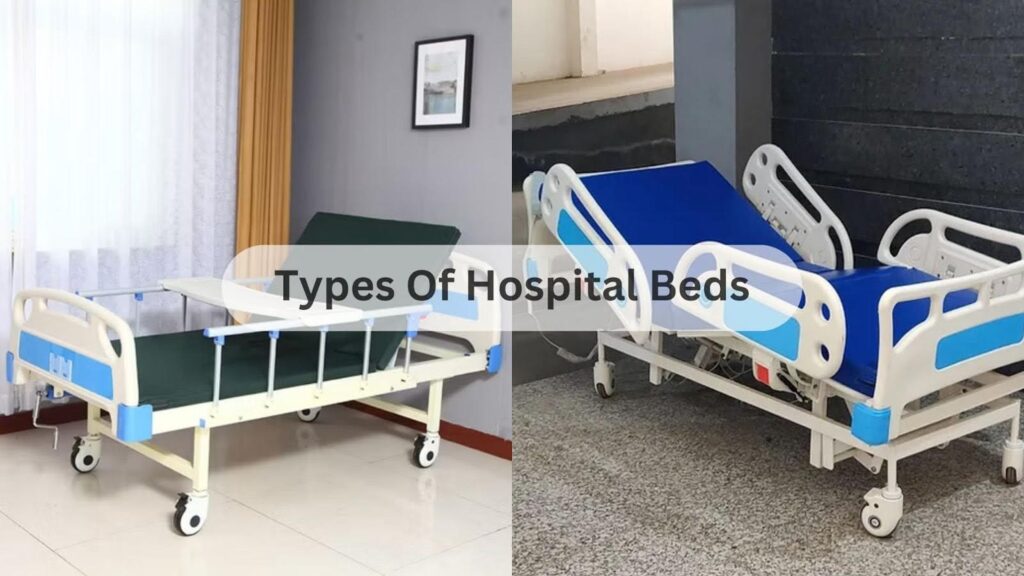
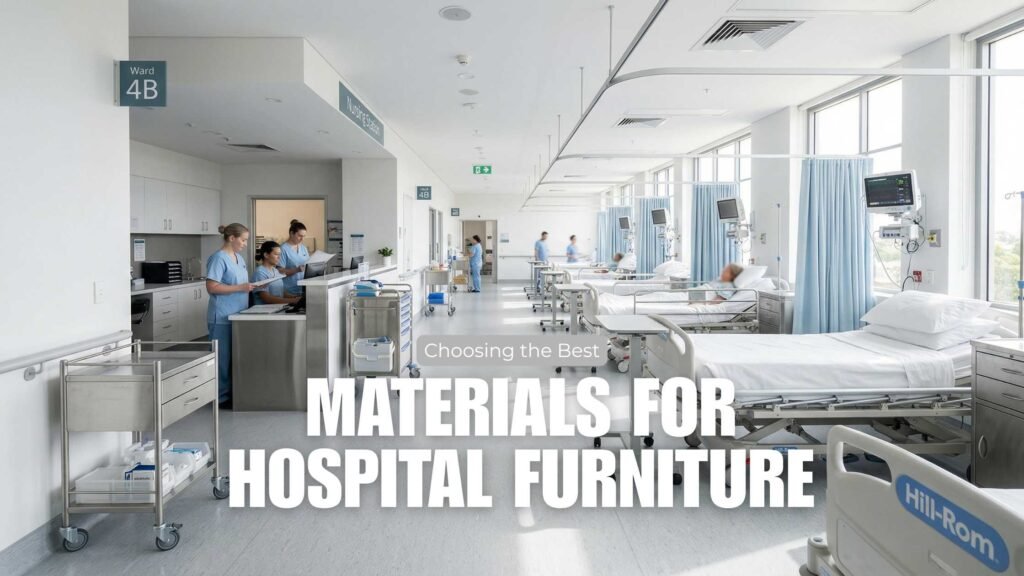
Hospital furniture works hard. Harder than most people realize. It’s dragged across floors, wiped down with strong chemicals, adjusted between patients and used around the clock. Day after day. And while it rarely gets noticed, it quietly supports almost everything that happens in a hospital patient safety hygiene staff movement even how comfortable recovery feels.
That’s why Materials for Hospital Furniture aren’t really about how furniture looks. They’re about how it behaves after years of continuous use and how well it withstands constant cleaning, repeated disinfection, and daily wear. The right materials allow hospital furniture to be wiped down quickly during a night shift without damage or residue buildup. They remain supportive and comfortable for patients who may barely move for days at a time. Choose the wrong materials for hospital furniture and the consequences appear fast: frequent repairs, early replacements and in some cases serious safety concerns.
This guide focuses on the Best Materials for Hospital Furniture actually depending on where they work well, and where they don’t.
Why material choice matters so much in hospitals

Hospitals don’t slow down. Furniture is always in use, always moving. It’s adjusted between patients, cleaned again and again and handled by dozens, sometimes hundreds of people every week.
Materials need to stand up to:
- Constant patient transfers and staff handling
- Strong disinfectants used several times a day
- Moisture, spills, heat and humidity
- Heavy loads and repeated stress
- Strict hygiene and safety rules
This isn’t home furniture. It’s not office furniture either. In hospitals, reliability comes first. Looks are secondary if they matter at all.
When materials are chosen properly, the difference is obvious. Fewer breakdowns. Better infection control. More comfortable patients. Less frustration for staff.
Core Factors to Consider When Choosing Hospital Furniture Materials
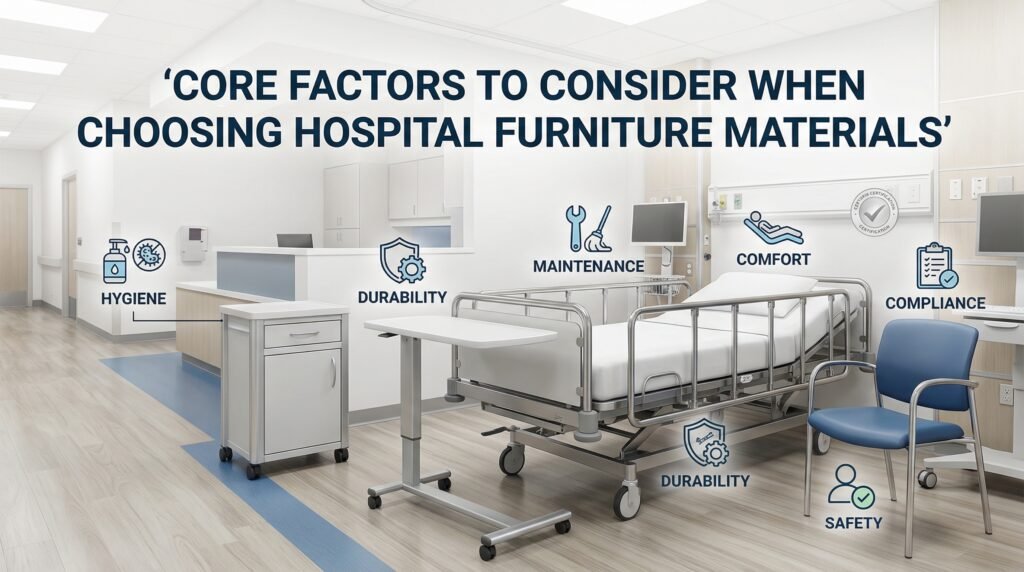
Before selecting any material, hospitals and manufacturers must evaluate several critical factors.
- Hygiene
Surfaces need to be smooth, non-porous, and quick to clean. Every seam or crack is a place bacteria can settle. - Strength and durability
Furniture gets knocked, leaned on, rolled, and overloaded. It has to stay solid long after the “new” feeling is gone. - Safety
Fire resistance, non-toxic finishes, chemical stability these are basics, not extras. Sharp edges and fragile parts have no place here. - Maintenance
If something needs constant fixing or special care, it becomes a liability. Low-maintenance materials save time and money. - Comfort and ergonomics
Patients spend long hours sitting or lying on this furniture. If it’s uncomfortable, it shows. Staff feel it too, especially when adjusting or moving equipment all day. - Compliance
Medical standards exist for a reason. Materials need to meet them, no shortcuts.
Materials commonly used in hospital furniture
Stainless steel
You’ll see it everywhere: operating rooms, ICUs, surgical trolleys, bed frames. It resists rust, handles harsh chemicals, and doesn’t absorb moisture or bacteria. That makes it ideal for sterile, high-risk areas.
The trade-off? It’s heavy, costly, and looks cold. Not the best choice where warmth and comfort matter.
Mild steel with powder coating
Often used in hospital beds, cabinets, exam tables, and overbed units. It offers solid strength at a lower cost, and a good powder coating protects against rust while allowing calmer colors.
The key word is good. Poor coatings chip, wear down, and expose the metal underneath—then problems start.
Aluminum
Common in wheelchairs, stretchers, portable trolleys, and foldable equipment. It’s lightweight, corrosion-resistant and easy to move, which makes life easier for staff.
It has limits, though. Aluminum isn’t suited for heavy, load-bearing furniture.
Medical-grade plastics (ABS, polypropylene)
Used for side rails, drawers, trays, bed panels, and accessories. These plastics don’t absorb moisture, handle chemicals well, and can be molded into ergonomic shapes. Many include antimicrobial properties.
Quality matters here. Cheaper plastics crack, fade, and weaken. Certification isn’t optional.
Engineered wood and laminates
Found in nurse stations, wardrobes, storage units, and admin areas. They add warmth and make non-clinical spaces feel less sterile. High-pressure laminates are durable and easy to clean when used correctly.
Moisture is the weak point. These materials don’t belong in sterile or high-humidity areas unless properly treated.
Upholstery, foam and mattress materials
Used in patient chairs, recliners, waiting areas, and mattresses. Medical-grade upholstery balances comfort with hygiene. It’s waterproof, fire-retardant, antimicrobial, and designed for frequent cleaning.
Lower quality versions don’t age well. They stiffen, crack, and quickly become uncomfortable and unhygienic.
Where hospital furniture materials are heading
Material development keeps moving forward. Antimicrobial surfaces, smart materials with sensors, modular hybrid designs, and stronger fire- and chemical-resistant composites are becoming more common. The goal hasn’t changed: safer spaces, smoother workflows, better patient experiences.
Why choosing the right hospital furniture manufacturer really matters

Picking the right materials is important but it’s only half the story. The manufacturer behind the furniture matters just as much. Maybe more.
When Hospital Furniture Manufacturers and clinics look for medical furniture they can rely on long term, manufacturers like AOMA Alliance stand out for one simple reason: they design specifically for healthcare not for showrooms.
Their range of hospital beds, patient movement trolleys, operating room furniture and medical equipment is built around how hospitals actually function, not how products look in brochures.
- What sets them apart is a clear focus on:
- Certified medical-grade materials that meet healthcare standards
- Designs that prioritize patient safety and staff efficiency
- Furniture engineered to handle continuous use in demanding conditions
- Strict compliance with hygiene protocols and regulatory requirements
By combining the right materials with practical, experience-driven design, manufacturers like AOMA Alliance help healthcare facilities create spaces that are safer, easier to maintain and more efficient to operate. Over time, that also means fewer repairs, fewer replacements, and lower overall costs.
Final thoughts
Choosing Best Materials for Hospital Furniture isn’t a style decision. It’s a long term call that affects patient care, staff comfort, hygiene and operating costs. Every material steel, aluminum, plastic, engineered wood has its place. The key is knowing where it works best and where it doesn’t. Hospitals that understand material behavior and invest in certified, medical grade options end up with spaces that simply work better for everyone who depends on them.
FAQs :- Materials for Hospital Furniture
Q1. What is the best material for hospital furniture?
Ans. Stainless steel, powder-coated mild steel, aluminum and medical-grade plastics are the most reliable materials, depending on usage and area.
Q2. Why is stainless steel widely used in hospitals?
Ans. It is non-porous, corrosion-resistant, and easy to disinfect, making it ideal for infection-control areas.
Q3. Are plastic materials safe for hospital furniture?
Ans. Yes, certified medical-grade plastics like ABS and polypropylene are safe, durable, and easy to clean.
Q4. Which materials are best for hospital beds?
Ans. Hospital beds usually combine powder-coated or stainless steel frames with ABS panels and medical-grade upholstery.
Q5. Can wood be used in hospital furniture?
Ans. Engineered wood is suitable only for non-clinical areas like nurse stations and waiting areas.
Q6. How do materials impact infection control?
Ans. Smooth, non-porous materials reduce bacterial growth and support effective cleaning.