Newborn babies are very sensitive to temperature changes. Unlike adults, they cannot properly regulate their body heat, especially in the first few days after birth. Even a slight drop in body temperature can lead to serious health problems, such as breathing difficulties, low blood sugar, infections and developmental delays. That’s why thermal care is one of the most important aspects of newborn and neonatal care.
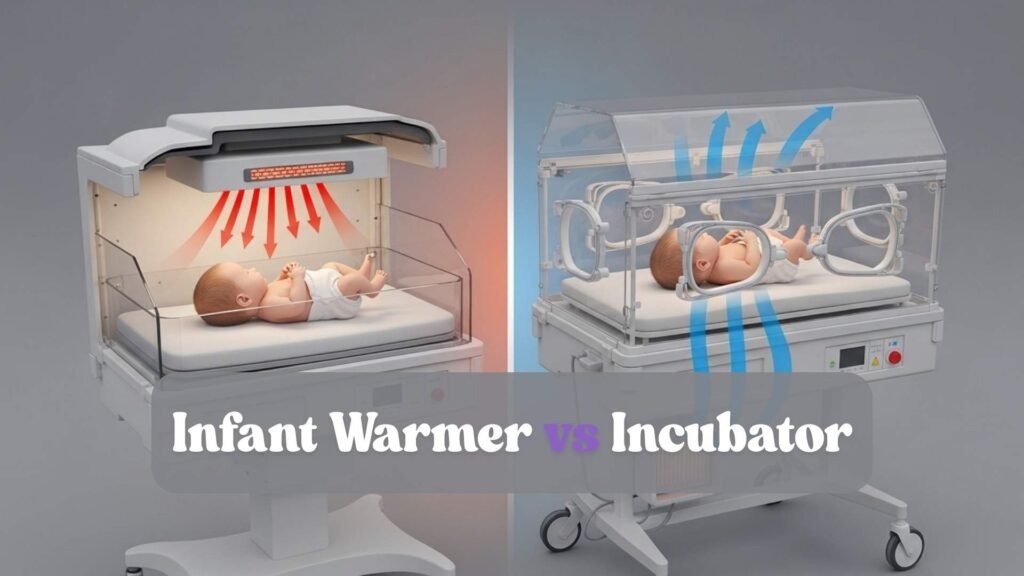
In hospitals and maternity Centers two main types of equipment are used to keep babies warm: Infant Warmer vs Incubator Although both have the same basic purpose of maintaining the baby’s body temperature they function differently and are used in different situations.
This blog provides a detailed yet easy to read comparison of Infant Warmer vs Incubator By the end, you’ll have a clear understanding of how each device works, their advantages and disadvantages and which one is best for your Newborn different care needs.
Why Temperature Control Is So Important for Newborns
Before comparing infant warmers and incubators it’s important to understand why temperature control is so important for newborns.
Newborns lose heat very quickly because:
- They have a large body surface area relative to their weight
- They have thin skin, especially in premature babies
- They have very little body fat
- Their nervous system is not mature enough to regulate temperature
If a newborn gets cold (a condition called neonatal hypothermia), the baby has to expend more energy to stay warm. This increased effort can affect breathing, feeding and overall growth. To prevent this, hospitals use specialized neonatal equipment such as infant warmers and incubators.
What is an Infant Warmer?
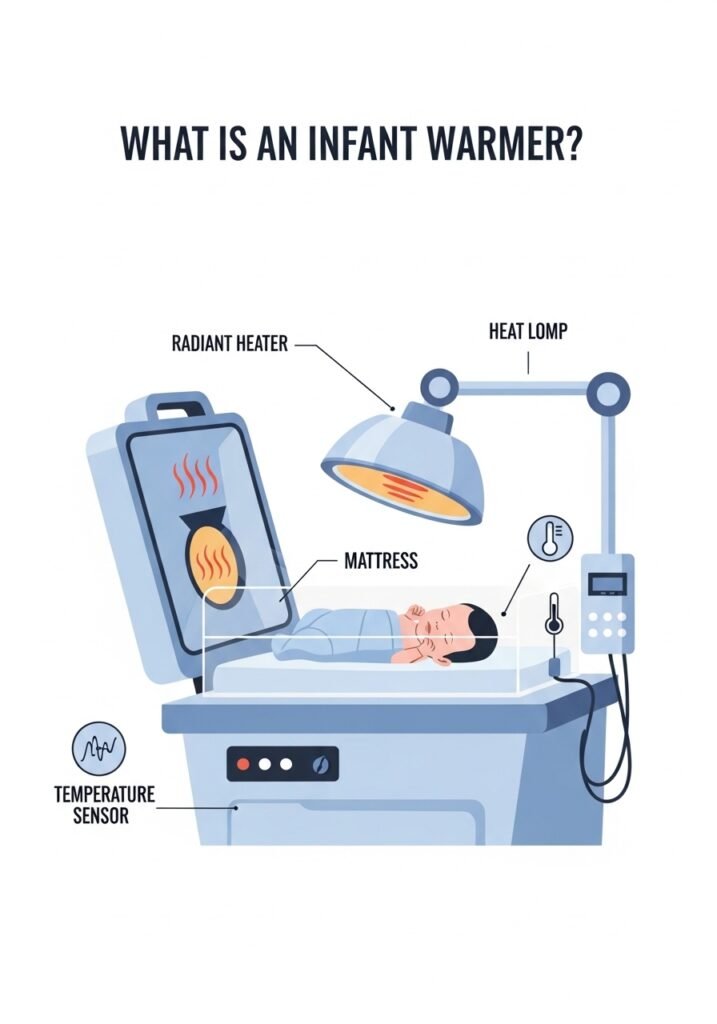
An Infant Warmer also called a Radiant Warmer is an open care system designed to provide warmth to a newborn baby using radiant heat. The baby is placed on a flat mattress, and a heating unit positioned above radiates heat directly onto the baby’s body. These devices are widely used in delivery rooms and NICUs, and selecting a trusted Infant Warmer Manufacturer is essential to ensure consistent performance, safety, and effective thermal care for newborns.
How an infant warmer works
- Heat is provided by an overhead radiant heater.
- A temperature sensor can be placed on the baby’s skin.
- The warmer automatically adjusts the heat output to maintain a consistent temperature.
- The baby is completely exposed making it easy to reach.
Because of its open design, an infant warmer allows doctors and nurses to quickly access the baby for examinations or procedures.
Key Features of Infant Warmers
Infant warmers are widely used in delivery rooms and neonatal units because of their practical design. Some important features include:
- Open bed system
- Radiant heat technology
- Fast warming capability
- Easy access for caregivers
- Space for resuscitation and medical procedures
- Simple cleaning and maintenance
These features make infant warmers especially useful immediately after birth.
When Are Infant Warmers Used?
Infant warmers are best suited for short term and immediate neonatal care. They are commonly used right after delivery to prevent heat loss, during neonatal resuscitation and for routine newborn examinations. Infant warmers are also helpful during medical procedures such as IV insertion or intubation as they allow easy access to the baby while maintaining warmth. They are ideal for stable full-term babies who only require temporary thermal support. However because the baby remains exposed to the surrounding environment infant warmers are generally not recommended for long term care.
Advantages of Infant Warmers
Infant warmers offer several benefits:
- Quick Access
Doctors and nurses can easily reach the baby without opening doors or ports. - Ideal for Emergency Care
Perfect for resuscitation and urgent procedures. - Rapid Temperature Stabilization
Helps restore body temperature quickly after birth. - Ease of Use
Simple design makes operation straightforward. - Cost-Effective
Generally less expensive than incubators.
What Is an Incubator?
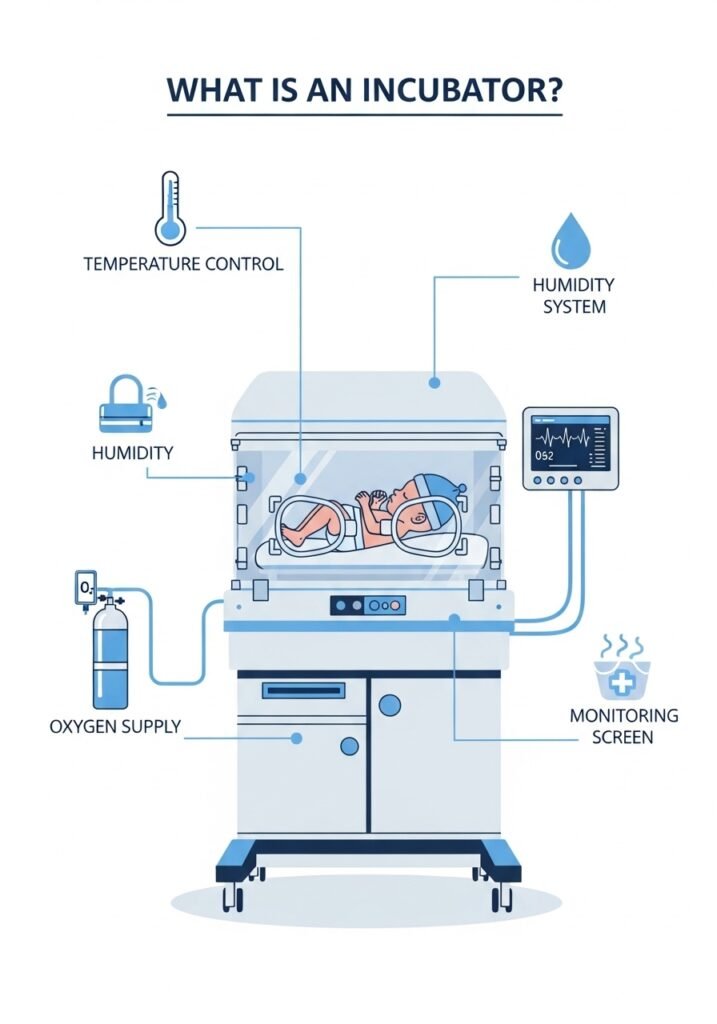
A neonatal incubator is a closed, transparent chamber designed to provide a carefully controlled environment for newborns. It maintains optimal temperature, humidity, and sometimes oxygen levels to support fragile infants.
The baby is placed inside the incubator, which protects them from external disturbances while creating a stable micro-environment.
How an Incubator Works
- Warm air circulates evenly inside the chamber
- Temperature is precisely controlled using sensors
- Humidity levels can be adjusted
- Access ports allow caregivers to handle the baby
- Some incubators support oxygen delivery
This controlled environment reduces stress and energy loss in newborns, especially premature babies.
Key Features of Incubators
Incubators are designed for advanced neonatal care and include features such as:
- Enclosed thermal chamber
- Precise temperature regulation
- Adjustable humidity control
- Protection from drafts and noise
- Reduced infection exposure
- Support for long-term care
These features make incubators a cornerstone of NICU care.
When Are Incubators Used?
Incubators are typically used for babies who require specialized and prolonged medical care. They are especially important for premature infants, low birth weight and very low birth weight babies as well as newborns with breathing difficulties or underdeveloped skin that makes it hard to retain body heat. Incubators also support infants recovering from illness or infection by providing a controlled and protective environment. Due to these advanced care needs, incubators are most commonly found in Neonatal Intensive Care Units (NICUs).
Advantages of Incubators
Incubators offer many important benefits:
- Stable Temperature Control
Maintains a constant, comfortable temperature. - Humidity Regulation
Prevents dehydration and excessive heat loss. - Reduced Infection Risk
An enclosed environment protects fragile infants. - Energy Conservation
Babies use less energy to stay warm, supporting growth. - Long-Term Care
Suitable for days or even weeks of neonatal support.
Infant Warmer vs Incubator: Side-by-Side Comparison
| Feature | Infant Warmer | Incubator |
| Design | Open bed | Closed chamber |
| Heat Method | Radiant heat | Warm air circulation |
| Humidity Control | No | Yes |
| Access to Baby | Full and immediate | Limited via ports |
| Infection Protection | Low | High |
| Best Use | Short-term care | Long-term care |
| Ideal For | Term babies, emergencies | Preterm and fragile babies |
Temperature Control: A Major Difference
One of the biggest differences in the Infant Warmer vs Incubator discussion is how each device manages temperature.
- Infant warmers heat the baby directly but allow heat to escape into the room.
- Incubators create a warm environment around the baby, reducing heat loss from all sides.
For premature infants who lose heat easily, incubators are usually the better option.
Which One Is Best for Newborn Care?
There is no single answer. The best choice depends on the baby’s condition.
Infant Warmer Is Best When:
- Immediate care is required
- Baby is full-term and stable
- Short-term temperature support is needed
Incubator Is Best When:
- Baby is premature or low birth weight
- Long-term care is required
- Humidity and infection control are important
Final Conclusion
The debate between Infant Warmer vs Incubator is not about which device is better overall it is about choosing the right tool for the right situation. Infant warmers are ideal for quick access, emergency care and short term use especially right after birth. Incubators, on the other hand, provide a carefully controlled environment that supports the growth and recovery of premature and fragile newborns. Both devices are essential in modern neonatal care, and together they help ensure that every newborn gets the warmth, safety, and support they need to thrive. For hospitals and healthcare providers, choosing a reliable Infant Warmer Manufacturer in India plays a crucial role in maintaining high standards of neonatal care and ensuring the best outcomes for newborns.
Both devices are essential in modern neonatal care, and together they help ensure that every newborn gets the warmth, safety, and support they need to thrive.
Frequently Asked Questions (FAQs)
1. What is an infant warmer?
An infant warmer is a medical device used to keep newborn babies warm using radiant heat. The baby is placed on an open bed while heat is delivered from a heater positioned above.
2. How does an infant warmer work?
An infant warmer works by emitting radiant heat directly onto the baby’s body. A skin temperature sensor monitors the baby’s temperature and automatically adjusts the heat to keep it stable.
3. Is an infant warmer safe for newborns?
Yes, infant warmers are safe when used properly by trained medical staff. They are designed with temperature sensors and alarms to prevent overheating or underheating.
4. Can premature babies be kept on an infant warmer?
Premature babies can be placed on an infant warmer temporarily, especially during emergency care or procedures. However, for long-term care, incubators are preferred because they provide humidity and better protection.
5. How long can a baby stay on an infant warmer?
A baby usually stays on an infant warmer for a few minutes to several hours, depending on their condition. Once the baby is stable, they are moved to a crib or incubator.
6. Can infant warmers be used for full-term babies?
Yes, infant warmers are commonly used for full-term newborns, especially right after birth and during routine checks.