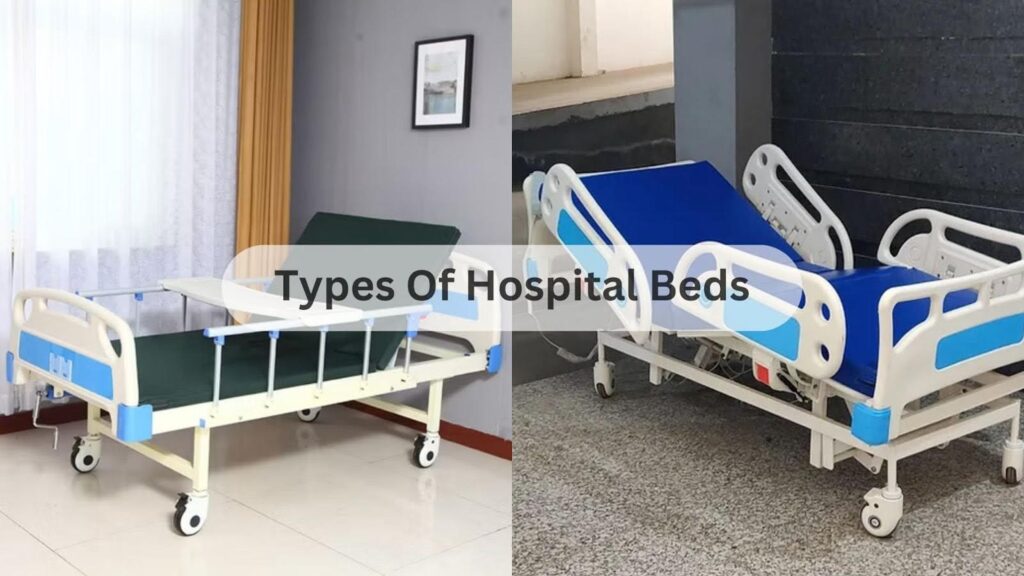
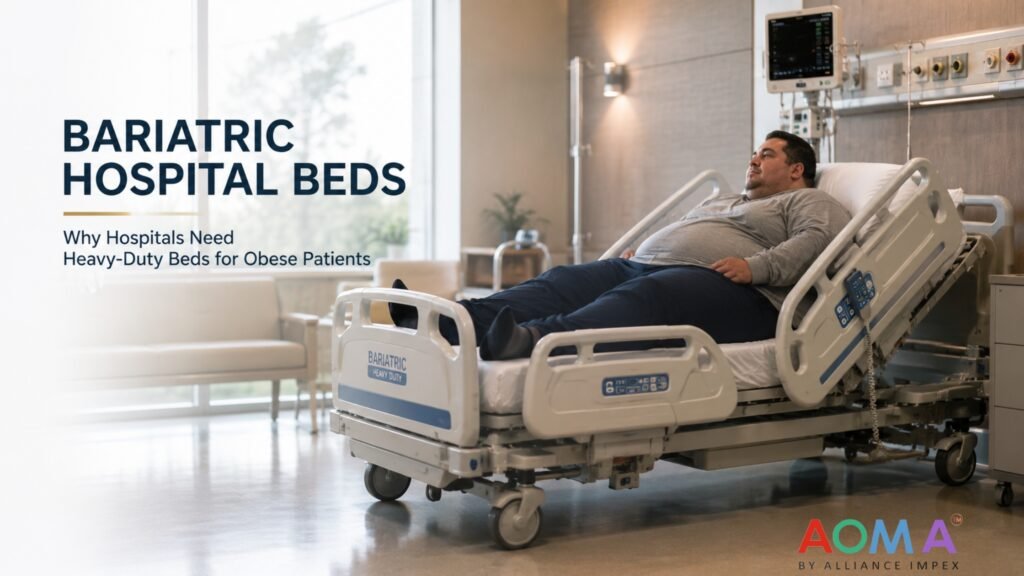
Walk into any busy hospital ward today, and you’ll notice something that wasn’t quite as common a decade ago patients who need more space, more support, and frankly, more bed than a standard hospital bed can offer. With obesity rates climbing steadily across India, hospitals are being forced to rethink a piece of equipment most people never think twice about: the bed itself. This is where Bariatric Hospital Beds come into the picture, and honestly, they’re no longer a “nice to have” for hospitals. They’re becoming a necessity.
In this blog, we’ll walk through what bariatric hospital beds actually are, why regular beds fall short for heavier patients, and what hospitals should be looking for when they decide it’s time to invest in one.
What Are Bariatric Hospital Beds?
A bariatric hospital bed is essentially a hospital bed engineered specifically for patients who weigh significantly more than what a standard bed is rated to support. While a regular hospital bed is usually built to handle patients up to around 135-150 kg, bariatric beds are constructed to safely support anywhere from 180 kg up to 350 kg or even more, depending on the model.
But it’s not just about strength. These are Heavy Duty Hospital Beds in every sense wider frames, reinforced motors, sturdier side rails, and mattresses designed to distribute weight evenly instead of concentrating pressure in one spot. Everything about the design is built around one goal: keeping a heavier patient safe, comfortable, and properly supported during their hospital stay.
Why Regular Hospital Beds Aren’t Enough for Obese Patients
Here’s the thing a standard hospital bed isn’t a bad product; it’s simply not designed for a different weight category. When a patient who weighs more than the bed’s rated capacity is placed on it, several things can go wrong, and none of them are minor.
The bed frame can bend or weaken over time under the extra strain, motors can burn out faster than expected, and worst of all, there’s a genuine safety risk of the bed collapsing or the side rails failing when a patient needs to hold onto them. Beyond the mechanical risks, a bed that’s too narrow simply doesn’t give a heavier patient the room they need to reposition themselves comfortably, which often leads to more pressure sores and general discomfort during recovery. It’s a problem that quietly builds up in the background until something goes wrong which is exactly why more hospitals are choosing to plan instead of waiting for an incident.
Key Features of Bariatric Hospital Beds
- Higher Weight Capacity
This is the most obvious difference, but it’s worth understanding the numbers. The Bariatric Bed Weight Capacity typically starts around 180 kg and can go well beyond 300 kg in specialized models, giving hospitals options depending on the patient population they’re treating most often.
- Wider Bed Frame and Mattress
A standard hospital bed is usually about 90 cm wide. Bariatric beds are noticeably wider, sometimes reaching 100-135 cm, giving patients enough room to move, turn, and sit up without feeling cramped or restricted.
- Reinforced Motor and Frame Strength
Since these beds carry significantly more weight, the motors that control height and incline adjustments are built tougher, and the frame itself uses thicker, more durable materials to prevent bending or structural fatigue over time.
- Advanced Safety Rails and Side Supports
Bariatric beds come with stronger, wider side rails that patients can actually rely on for support when repositioning or getting in and out of bed, something that matters a lot more than people realize until they’ve seen it in practice.
Benefits of Using Bariatric Hospital Beds
- Patient Safety and Comfort: When a bed is properly rated for a patient’s weight, there’s no guesswork involved. The patient can move, adjust their position, and rest without worrying about whether the bed can handle it.
- Reduced Risk of Bed Failure or Injury: Using the right equipment for the right patient dramatically lowers the chance of mechanical failure, which protects both the patient and the hospital from a liability standpoint.
- Better Staff Ergonomics: Nurses and caregivers deal with lifting and repositioning patients multiple times a day. Bariatric beds are often designed with better height adjustment ranges and turning assistance features, which makes this physically demanding part of the job noticeably easier and safer for staff.
- Improved Pressure Sore Prevention: Wider mattresses combined with better weight distribution significantly reduce the pressure points that lead to bedsores, which is a common and painful issue for patients who spend extended time in bed.
Where Are Bariatric Hospital Beds Commonly Used?
While the obvious answer is hospitals, the reality is that demand for these beds spans across several types of facilities. An Obese Patient Hospital Bed is now a standard requirement in:
- General hospital wards
- Intensive Care Units (ICUs)
- Post-surgical recovery units
- Rehabilitation centers
- Long-term care and geriatric facilities
- Home healthcare setups for bariatric patients
Any facility that regularly treats patients above the standard weight threshold needs at least a few bariatric beds on hand, even if it’s not their primary patient category.
ICU Bariatric Beds vs General Ward Bariatric Beds: What’s the Difference
This is a question that comes up often, so let’s break it down simply. An ICU Bariatric Bed is built for critical care situations it typically comes with more advanced electric controls, built-in weighing scales, CPR functions, and closer integration with monitoring equipment, since ICU patients often can’t reposition themselves and need constant medical attention.
General ward bariatric beds, on the other hand, are designed more around recovery and daily comfort. They still offer the same weight capacity and wider frame, but the focus shifts toward ease of use, mobility features, and patient independence, since ward patients are usually in a more stable condition. Choosing between the two really comes down to the level of care your facility provides and how critical the patients on that particular ward tend to be.
How to Choose the Right Bariatric Hospital Bed
Before purchasing, it helps to go through a short checklist:
- Weight capacity – Always choose a bed rated comfortably above your average patient weight, not just at the exact limit.
- Mattress type – Foam, air, or pressure-relief mattresses each serve different needs depending on how long patients typically stay in bed.
- Electric vs manual controls – Electric beds make it far easier for staff to adjust height and incline without physically straining themselves, which matters even more with heavier patients.
- Mobility and maneuverability – Check the wheel quality and locking mechanisms, especially if the bed needs to be moved between wards or rooms frequently.
- Ease of maintenance – Look for beds where parts like motors and mattresses can be serviced or replaced without needing to replace the entire unit.
Bariatric Hospital Bed Price in India: What Affects the Cost
Bariatric hospital bed price in India can vary quite a bit depending on a few key factors. The weight capacity plays a big role — beds rated for 250 kg or higher typically cost more than those rated closer to 180 kg. The type of controls also matters, with fully electric beds priced higher than semi-electric or manual versions. Additional features like built-in scales, CPR release functions, and advanced mattress systems will also push the price up.
Bulk orders for hospitals or healthcare chains usually bring the per-unit cost down significantly compared to buying a single bed, which is worth keeping in mind for facilities planning to stock multiple units.
Why Choose Aoma Alliance’s Bariatric Hospital Beds
As a trusted Hospital Beds Manufacturer, Aoma Alliance builds its bariatric hospital beds with Indian hospital conditions and patient needs in mind from general wards to intensive care setups where reliability genuinely matters. Every bed is engineered for strength, patient comfort, and long-term durability, even under continuous daily use.
We work with hospitals, nursing homes, and healthcare chains as a dependable B2B Hospital Beds Manufacturer and Wholesale Patient Beds Supplier, so whether you need a single unit or Bulk Hospital Beds for a new facility, sourcing is straightforward and reliable.
If you’re looking to expand your facility’s equipment beyond standard beds, it’s worth exploring Aoma Alliance’s complete range as a trusted Hospital Beds Manufacturer, offering Medical Beds for ICU, general ward, and bariatric use, along with Bulk Hospital Beds supply for hospitals and healthcare chains across India.
Frequently Asked Questions Releted to Bariatric Hospital Beds
1. What weight can a bariatric hospital bed support?
Most bariatric hospital beds support anywhere from 180 kg to 350 kg, depending on the model and manufacturer, with some heavy-duty versions going even higher.
2. Are bariatric beds only needed in large hospitals?
Not at all. Clinics, rehabilitation centers, and even home healthcare setups increasingly need at least one or two bariatric beds on hand, especially as obesity rates continue to rise.
3. Do bariatric hospital beds cost significantly more than regular beds?
Yes, generally they cost more due to the reinforced frame, wider mattress, and stronger motor components, but the added safety and durability usually justify the investment for facilities that need them.
4. Can bariatric beds be used for regular patients too?
Technically yes, though it’s usually not cost-effective since these beds are priced for their specialized use. Hospitals typically reserve them specifically for patients who need the extra capacity.
5. How is a bariatric bed different from a regular hospital bed in terms of maintenance?
Bariatric beds generally require slightly more attention to motor and frame maintenance given the heavier daily load, but the core maintenance process is otherwise similar to standard hospital beds.
Final Thoughts
As patient demographics shift and obesity-related admissions continue to rise across India, having the right equipment isn’t just about comfort anymore it’s about basic patient safety and reducing risk for both patients and staff. Investing in bariatric hospital beds is one of those decisions that quietly pays off every single day a hospital uses them, long before anyone notices what could have gone wrong without them.