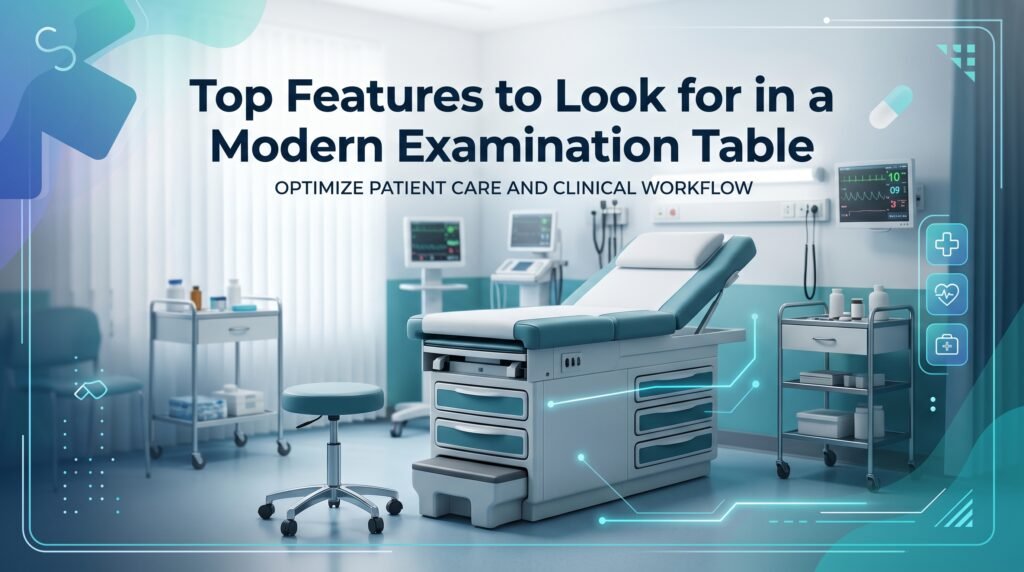
In any healthcare environment whether it is a busy urban hospital, a specialty clinic, a diagnostic center or a maternity home the examination table is one of the most essential pieces of equipment in the room. It is the first point of physical contact between a patient and a healthcare professional, and its quality, design and functionality can have a direct impact on patient comfort and overall workflow efficiency.
As healthcare facilities continue to evolve and patient expectations rise, the standards for Medical Furniture have grown significantly. Gone are the days when a basic padded bench was considered sufficient. Today’s modern Examination Table Features solutions are engineered with precision, built with medical grade materials and designed to support a wide range of clinical procedures from routine check ups and orthopaedic assessments to gynaecological examinations and paediatric consultations.
Modern Examination Table Features That Improve Patient Care
This guide walks you through every key Examination Table Features consideration when evaluating a modern examination table, the different types available and how to match the right table to your specific facility needs.
Why Modern Examination Tables Matter in Healthcare

Traditional examination tables were simple, static structures a fixed height couch with minimal padding and very little adjustability. While they served their basic purpose, they fell short in several important ways: they were difficult to clean uncomfortable for patients with limited mobility, and offered no positional flexibility for healthcare providers.
Healthcare facilities now prioritise features like adjustable height, multi position backrests, easy to disinfect surfaces, and sturdy structural builds because these features directly affect care quality, reduce clinician fatigue, and ensure compliance with healthcare safety standards. Choosing the right Clinic Examination Table Features is no longer optional it is a fundamental part of delivering professional, modern healthcare.
Key Features to Consider in a Modern Examination Table
1. Ergonomic Design for Patient Comfort
The best examination tables are designed with the human body in mind. Ergonomic contouring, adequate width, and proper surface cushioning all contribute to a patient’s sense of comfort and security during what can often be a stressful experience.
A well designed table ensures that patients of varying body types including elderly individuals, pregnant women, and those with limited mobility — can be positioned comfortably and safely. From the perspective of the healthcare provider, ergonomic design also reduces the need for awkward bending or repositioning, minimising physical strain during prolonged examination sessions.
2. Adjustable Height Mechanism
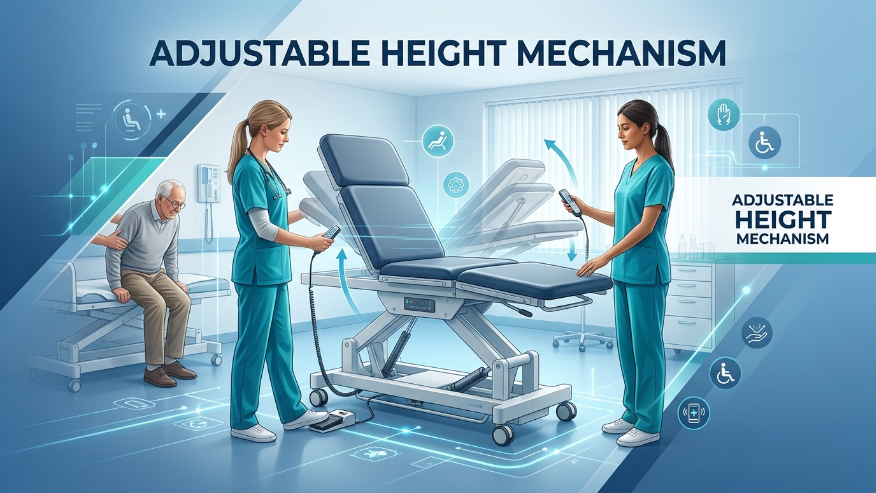
Height adjustability is one of the most practical and frequently used features in a modern adjustable examination table. The ability to raise or lower the table surface allows healthcare providers to position patients at an ideal working height, which reduces back and shoulder strain a common occupational concern among clinicians.
Height adjustment also makes it significantly easier for patients to mount and dismount the table, particularly for the elderly, those recovering from surgery, or individuals with joint conditions. Look for tables that offer smooth, stable height transitions either through manual foot pedals, hydraulic systems, or electric controls.
3. High Weight Capacity and Structural Stability
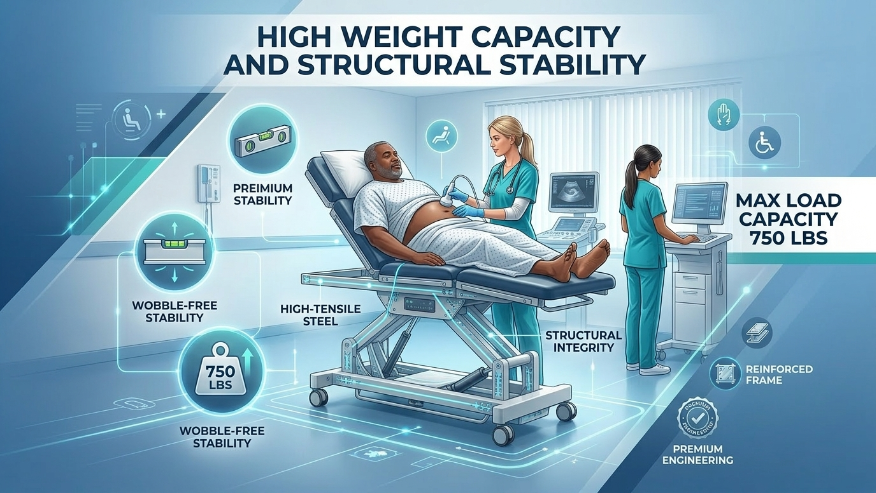
A reliable examination table must be able to accommodate patients across a wide weight range without compromising safety or stability. Modern tables are engineered with reinforced steel frames and robust construction to support high weight capacities typically ranging from 150 kg to 250 kg or more, depending on the model.
Structural stability is equally important. Any flex, wobble, or instability in the table can make patients feel unsafe and can interfere with clinical procedures. When reviewing Examination Table Manufacturers Features offer, always confirm the load-bearing specifications and ask about the quality of the underlying frame construction.
4. Easy-to-Clean Hygienic Surface
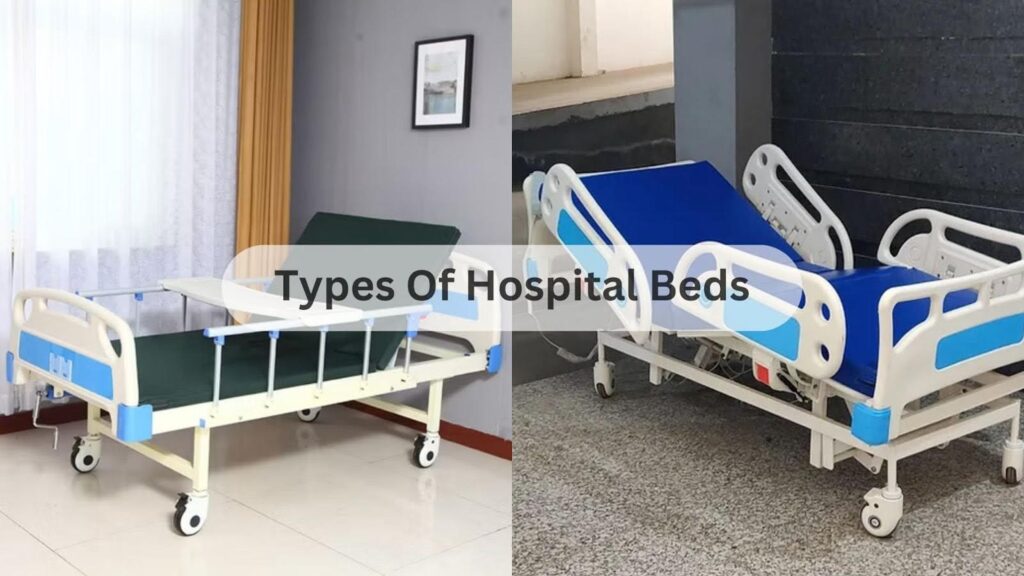
In a clinical environment, infection control is paramount. Every surface in a consultation room including the examination table must be easy to clean and disinfect between patients. Modern Hospital Beds are designed with seamless, smooth upholstery and minimal crevices where pathogens could accumulate.
Some advanced models feature antimicrobial surface coatings that provide an added layer of protection. When evaluating Clinic Examination Table Features designs, confirm that the materials are compatible with standard hospital-grade disinfectants and that there are no gaps between the cushion and the frame where fluids could collect.
5. Mobility with Lockable Wheels

For clinics and hospital wards where flexibility is important, an examination table fitted with heavy-duty castors allows easy repositioning between rooms or within a larger space. This is especially useful in multi-use examination suites, physiotherapy departments, and emergency medicine settings.
Lockable wheels are equally important once the table is in position, it must remain completely stationary during examinations to prevent accidents. Look for castors with a reliable and easy to operate locking mechanism that engages firmly and releases smoothly.
6. Electric or Hydraulic Adjustment Options
While manual adjustment mechanisms are functional and cost-effective, electric and hydraulic systems offer a significantly smoother and more precise operating experience. Electric examination tables use a motorised system often controlled by a foot switch or a handheld remote to adjust height, backrest angle, and leg section position.
Hydraulic tables use fluid pressure to enable height adjustment, providing smooth and quiet movement with minimal effort. Both options reduce physical strain on healthcare providers and are particularly recommended for high-volume clinics, orthopaedic and gynaecology practices, and facilities where patient positioning is a frequent requirement.
These are among the most sought after Features Examination Table Manufacturers highlight in their premium product ranges.
7. Safety Features: Side Rails and Anti Slip Design
Patient safety during examination is a fundamental responsibility. Side rails provide an additional layer of security for patients who may be at risk of rolling or falling from the table particularly relevant in paediatric care, post operative assessments, and examinations involving sedated or disoriented patients.
Anti-slip surfaces on the footrest and step stool (where included), non skid rubber feet on stationary models and stable base designs all contribute to a safer examination environment. These safety features should be considered essential, not optional.
8. Multi-Position Backrest Adjustment
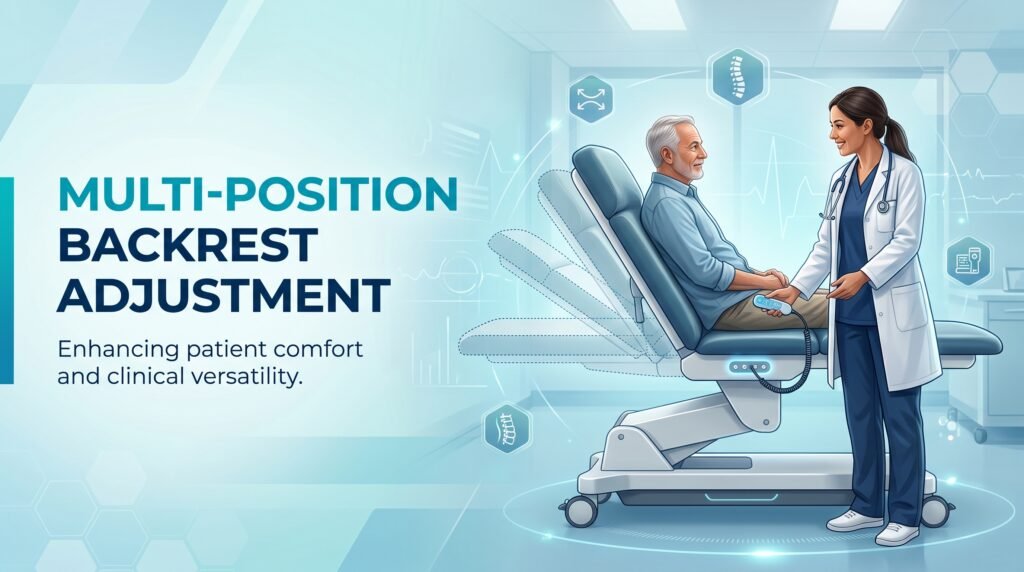
A versatile multi-position backrest allows the examination table to be configured for a wide range of clinical uses from a flat supine position for abdominal examinations to a semi reclined position for cardiac assessments, or a near-upright position for consultations and respiratory evaluations.
Backrest adjustment can be manual (via a ratchet mechanism) or motorised. The greater the range of positions, the more versatile the table becomes — particularly important in general practice settings where multiple types of examinations are performed daily.
9. Durability for Long-Term Use
A quality examination table is a long-term investment. The materials, hardware, and mechanisms used in construction should be selected for durability under daily clinical use which can mean dozens of patients per day across multiple years. Ask manufacturers about the expected service life of their products, the availability of replacement parts, and the warranty terms.
Durability in Features Medical Furniture is not merely about longevity; it is also about maintaining consistent performance, smooth height adjustment, reliable locking mechanisms, and upholstery that does not degrade over the full life of the product.
10. Customisation Options by Manufacturers

Every healthcare facility is unique. The best Examination Table Manufacturers offer customisation options that allow buyers to specify upholstery colour, surface dimensions, storage configurations, height ranges, and accessory packages to suit their specific environment and clinical requirements.
Customisation also extends to branding in some cases hospital networks and large healthcare providers may prefer tables that are fitted to their interior design standards or colour schemes. Working with a manufacturer that offers tailored solutions ensures the final product fits perfectly within your facility’s workflow and aesthetic.
Examination Table Types and Their Features
General Examination Tables
These are the most widely used tables across primary care clinics, outpatient departments, and diagnostic centres. They typically feature adjustable backrests, height adjustment, and basic storage. They are suitable for routine physical examinations across a wide patient demographic.
Gynaecology Examination Tables
Designed with stirrups, leg section extensions, and Trendelenburg positioning, gynaecology tables support obstetric and reproductive health examinations. Hygiene features and easy access to the perineal area are key design considerations.
Paediatric Examination Tables
These tables are shorter, narrower, and often feature safety rails and cheerful aesthetics to ease the anxiety of young patients. Many paediatric models include an integrated scale and a flat, easy-to-clean surface.
Electric Examination Tables
Fully motorised and operated via foot pedal or remote control, electric tables are ideal for high volume facilities and specialties requiring frequent patient repositioning. They offer the greatest precision and ease of use.
Hydraulic Examination Tables
Using a foot pump hydraulic system for height adjustment, these tables offer smooth, quiet operation at a more accessible price point than full electric models. They are a popular choice in mid range clinic setups.
How to Choose the Right Examination Table for Your Facility
Selecting the right examination couch or table is a decision that should be informed by several practical factors:
- Clinic size and layout: Compact models suit smaller consultation rooms; larger multi-section tables work better in spacious examination suites.
- Patient volume: High-volume facilities benefit from durable, easy-clean, and quick-to-adjust electric models.
- Clinical specialty: The type of examinations performed will determine the specific configuration required stirrups for gynaecology, flat surfaces for general medicine, height variable designs for orthopaedics.
- Budget: Balance upfront cost against long term durability. A higher-quality table may cost more initially but prove more economical over time through reduced maintenance and replacement costs.
- Maintenance requirements: Choose tables with easily sourced spare parts and good after-sales support from the medical furniture supplier.
Why Quality Medical Furniture Matters
The quality of medical furniture including examination tables is a direct reflection of a healthcare facility’s commitment to its patients and staff. Durable, well-designed healthcare furniture solutions reduce equipment downtime, minimise replacement costs, and create an environment of clinical professionalism that builds patient trust.
For hospitals and clinics competing in an increasingly quality conscious market, every detail matters from the reception desk to the examination room. Patients notice when furniture is worn, wobbly, or poorly maintained. High-quality Hospital Furniture Manufacturer products project confidence, hygiene, and care — qualities that reinforce a facility’s reputation.
Beyond perception, quality furniture protects healthcare workers. Poorly designed or unstable tables contribute to occupational injuries, disrupted workflows, and potential liability. Investing in quality is investing in the safety and efficiency of the entire care team.
Conclusion: Invest in the Right Examination Table for Better Care
The Modern Examination Table Features far more than a surface for patients to lie on it is a precision instrument in the delivery of clinical care. From adjustable height mechanisms and multi-position backrests to hygienic surfaces, electric adjustment systems, and accessibility features for elderly patients, every aspect of the table’s design contributes to better outcomes for both patients and clinicians.
Whether you are outfitting a new clinic, upgrading an existing hospital ward, or sourcing equipment for a diagnostic centre or maternity facility, taking the time to evaluate the full range of features available will help you make an investment that pays dividends for years to come.
Work with reputable Features Examination Table Manufacturers who offer customisation, quality assurance and reliable after sales support. Prioritise the features that align with your patient population and clinical workflow. And remember: the best examination table is the one that helps your team deliver the best possible care every single day.
Frequently Asked Questions (FAQs)
Q1. What are the most important features to look for in a modern examination table?
The most critical features include adjustable height, multi position backrest adjustment, medical grade upholstery, rust resistant construction and easy to clean surfaces.
Q2. What is the difference between a hydraulic and an electric examination table?
A hydraulic examination table uses a foot pump mechanism to adjust height smoothly and quietly without electricity. An electric examination table uses a motorised system controlled by a foot pedal or remote for height, backrest, and leg section adjustments.
Q3. How do I choose the right examination table for a small clinic?
For a small clinic, prioritise a compact, space-saving design that does not compromise on essential features. Look for a Features clinic examination table that offers adjustable height, easy cleaning, and adequate weight capacity within a smaller footprint. Foldable accessories and underslung storage can help maximise limited space.
Q4. What upholstery material is best for a hospital examination table?
Medical-grade PU (polyurethane) vinyl is the most recommended upholstery material for hospital and clinic examination tables. These are standard features medical furniture suppliers include in quality products.
Q5. How often should an examination table be replaced?
The lifespan of an examination table depends on usage intensity, maintenance practices, and build quality. In high-volume facilities, tables may need replacement or significant refurbishment every 5–8 years.