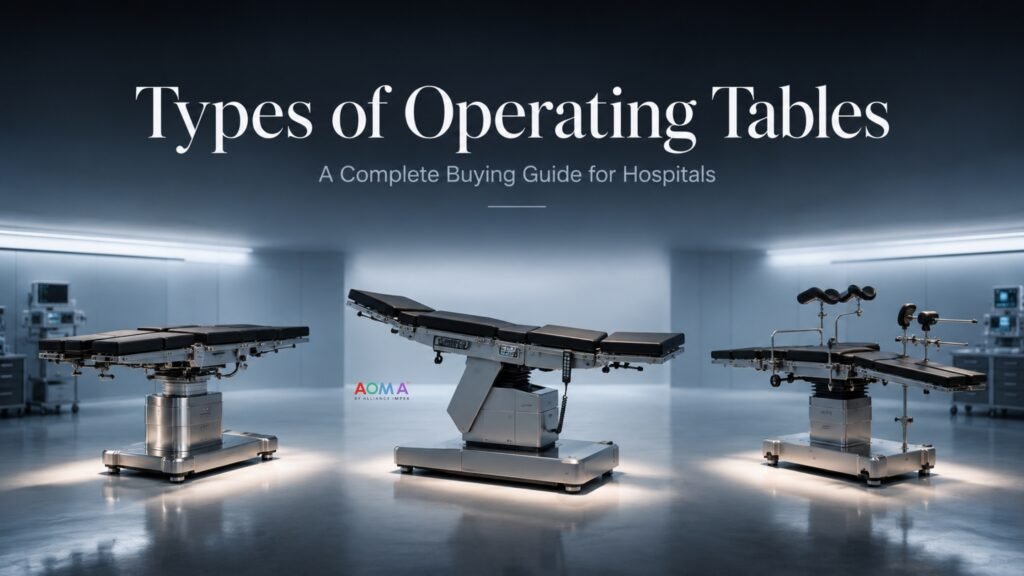
Walk into any operating room, and the table at the center of it all rarely gets a second glance from anyone outside the medical field. But ask a surgeon, and they’ll tell you it’s one of the most important pieces of equipment in the entire room. The right table doesn’t just hold a patient in place it directly affects positioning accuracy, procedure time, and even how safely a surgery goes. That’s exactly why understanding the different Types of Operating Tables matters, whether you’re setting up a new surgical suite or replacing outdated equipment in an existing one.
In this guide, we’ll walk through the main types of operating tables by mechanism and by surgical specialty, what features actually matter, and how to choose the right one for your facility.
What Is an Operating Table and Why Does the Right Choice Matter?
An operating table is a specialized, adjustable surface designed to position patients safely and precisely during surgery. Unlike a regular hospital bed, it’s built to support height adjustments, tilting, and sectional positioning, all while giving surgeons and their teams reliable access to the surgical site.
Choosing the wrong table for a given specialty can slow down procedures, limit positioning options, or even compromise patient safety in more complex surgeries. This is why hospitals rarely buy a single generic table anymore most facilities now stock a mix of different types of operating tables depending on the range of procedures they handle.
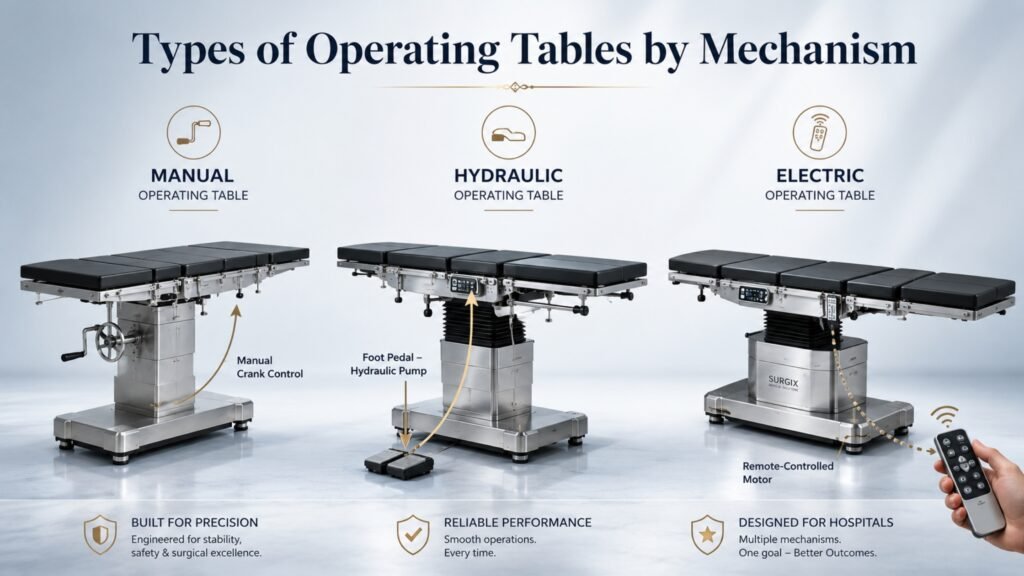
Types of Operating Tables by Mechanism
- Manual Operating Tables
Manual tables rely on mechanical cranks or levers for adjustments. They’re the most basic and budget-friendly option, and while they lack the precision of powered alternatives, they’re still used in smaller clinics or facilities with lower surgical volumes where cost matters more than speed.
- Hydraulic Operating Tables
A Hydraulic Operating Table uses a hydraulic pump system, typically controlled by a foot pedal, to adjust height, tilt, and positioning. These tables don’t require electricity to function, which makes them a dependable choice for general surgery and facilities looking for a balance between cost and functionality. They’re known for smooth, stable movement and tend to be more durable over years of heavy use.
- Electric Operating Tables
An Electric Operating Table uses motorized actuators, usually controlled through a remote, to adjust position with a level of precision that manual pumping can’t quite match. Many electric models also come with programmable presets, letting surgical teams save and recall specific positions for recurring procedures. These tables are quieter, faster to adjust, and generally preferred in high-volume surgical theaters where efficiency matters.
Hydraulic vs Electric Operating Tables: Which One Should You Choose?
This is one of the most common questions hospitals ask when upgrading their operating rooms, and the honest answer is that it depends on your surgical volume and budget.
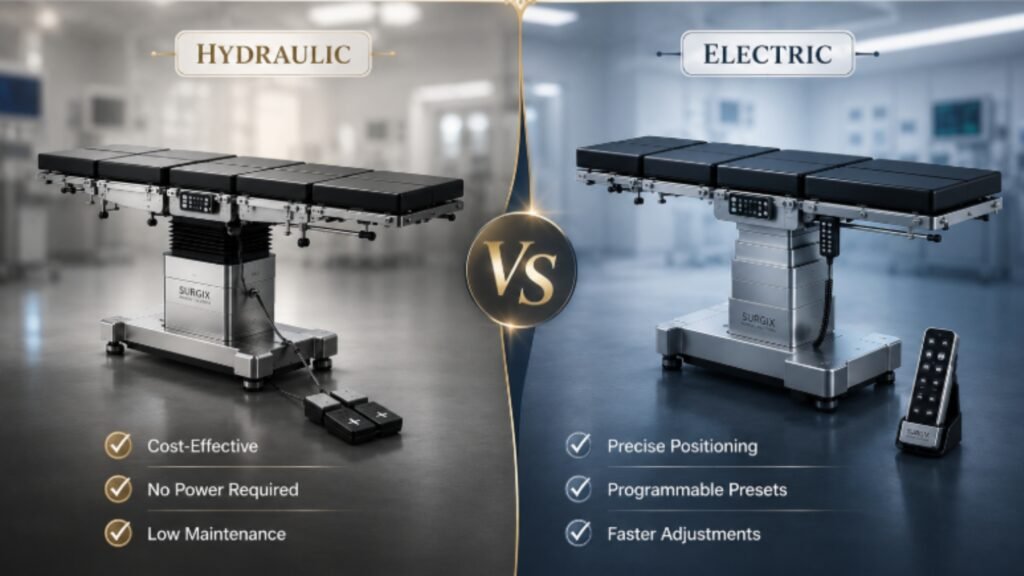
Hydraulic vs Electric Operating Table decisions usually come down to a few factors. Hydraulic tables are more cost-effective, don’t rely on a power source, and are generally easier to maintain long-term, making them a solid choice for general surgery and mid-sized facilities. Electric tables, on the other hand, offer far more precise, repeatable positioning and reduce physical effort for staff, which becomes especially valuable in facilities handling a high number of complex procedures where time and accuracy both matter. Facilities that handle a wide mix of specialties often end up stocking both hydraulic tables for routine procedures and electric tables for more demanding surgical environments.
Types of Operating Tables by Surgical Specialty
- General Surgery Tables
These are the most versatile tables in any facility, built to accommodate a wide range of procedures without being tailored to one specific specialty. Their flexibility in height, tilt, and length makes them the workhorse of most operating rooms.
- Orthopedic Operating Tables
An Orthopedic Operating Table is designed specifically for procedures involving bones and joints, often featuring traction attachments, removable limb supports, and higher load capacities to accommodate positioning needs during joint replacements or trauma surgeries. Aoma Alliance’s Orthopedic Extension Device falls into this category, built specifically to support these specialized positioning requirements.
- Gynecology and Obstetrics Tables
These tables come with adjustable leg stirrups, tilting backrests, and hygienic surface designs suited for maternity wards and outpatient gynecological procedures. Motorized delivery tables, in particular, have become the preferred choice in many facilities for the added comfort and precision they offer during childbirth-related procedures.
- C-Arm Compatible Tables
A C-arm Compatible Operating Table features a radiolucent tabletop, meaning it allows X-ray imaging to pass through without interference during the procedure. This is essential for specialties like urology, cardiology, and orthopedics, where real-time imaging plays a direct role in surgical accuracy.
- Neuro and Spine Surgery Tables
These tables are built with fine-tuning head clamps, thoracic supports, and lateral tilt capabilities that give neurosurgeons the precise positioning control needed for delicate procedures involving the brain and spine.
- Ophthalmic Operating Tables
Eye surgeries require an entirely different level of precision and stability, which is why ophthalmic tables are designed with specialized positioning and stability features suited for delicate procedures. Aoma Alliance’s Motorised Ophthalmic Operating Table is built specifically around these requirements.
Key Features to Look for in a Modern Operating Table
Understanding the different Surgical Table Types is only half the process knowing what features matter actually helps you make a better long-term investment. A few things worth prioritizing include anti-collision safety locks and fail-safe mechanisms, high load capacity that comfortably exceeds your average patient weight, radiolucent tabletop material if imaging compatibility is needed, smooth and quiet hydraulic or electric adjustment mechanisms, and surfaces that are easy to clean and resistant to disinfecting agents given how frequently these tables are sanitized between procedures.
How to Choose the Right Operating Table for Your Facility
Knowing how to choose an Operating Table starts with understanding your facility’s actual surgical caseload rather than just picking the most advanced option available. Consider the range of specialties your facility handles most often, since a table built for general surgery won’t serve a high-volume orthopedic center well. Factor in your budget realistically hydraulic tables offer excellent value for facilities without extremely high surgical volume, while electric tables justify their higher cost in busier, more specialized environments.
It’s also worth thinking about compatibility with existing equipment, particularly imaging systems, and consulting directly with the surgeons who will be using the table daily, since their day-to-day experience often reveals practical needs that specification sheets don’t capture.
OT Table Price in India: What Affects the Cost
OT Table Price in India varies significantly based on a few core factors. The mechanism plays a big role hydraulic tables are generally more affordable than electric ones due to simpler internal components. Specialty features like radiolucent tabletops, traction attachments, or programmable presets add to the cost, and the build material matters too: high-grade stainless steel commands a higher price than standard alloys due to its durability and corrosion resistance.
Bulk or wholesale orders for hospital chains and multi-specialty facilities typically bring the per-unit cost down considerably compared to purchasing a single table, which is worth factoring in for facilities planning larger procurement.
Why Choose Aoma Alliance’s Operating Tables
As a leading OT Table Manufacturer in India, Aoma Alliance offers a complete range built for both general and specialized surgical needs, from the Universal Hydraulic Operating Table and standard Hydraulic Operating Table for everyday procedures, to the Orthopedic Extension Device, Motorised Delivery Tables, and Motorised Ophthalmic Operating Table for more specialized surgical environments.
If your facility is looking to expand or upgrade its surgical infrastructure, it’s worth exploring our full Operating Tables range, engineered with medical-grade components, ISO and CE certification standards, and dedicated B2B support for hospitals ordering in bulk or setting up new surgical suites.
Frequently Asked Questions Related to Types of Operating Tables
1. What are the main types of operating tables used in hospitals?
The main types include manual, hydraulic, and electric operating tables by mechanism, along with specialty tables for general surgery, orthopedics, gynecology, C-arm imaging, neuro/spine, and ophthalmic procedures.
2. Is a hydraulic or electric operating table better for a new hospital?
It depends on your budget and surgical volume. Hydraulic tables offer excellent value for general and mid-sized facilities, while electric tables are better suited for high-volume or highly specialized surgical environments.
3. What features should I prioritize when buying an operating table?
Safety mechanisms like anti-collision locks, adequate load capacity, ease of cleaning, and compatibility with any imaging equipment you use are among the most important factors to check before buying.
4. Do operating tables need regular maintenance?
Yes, especially hydraulic and electric models, which benefit from periodic checks on their motors, pumps, and locking mechanisms to ensure consistent, safe performance over time.
5. Can one operating table handle multiple types of surgeries?
General surgery tables are versatile enough for a wide range of procedures, but highly specialized surgeries like orthopedic, neuro, or ophthalmic procedures typically require tables designed specifically for those needs.
Final Thoughts
Choosing between the different types of operating tables isn’t just a procurement decision; it’s one that directly affects how efficiently your surgical teams work and how safely your patients are cared for. Whether you’re setting up your first operating room or expanding an existing surgical suite, matching the right table type to your facility’s actual caseload will pay off far more than simply choosing the most feature-packed option available.