Healthcare is rapidly evolving, and today’s hospitals are expected to not only provide treatment but also a safe and comfortable environment for every patient, ensuring they experience no difficulty and recover quickly. One important aspect that often goes unseen is hospital beds. Older beds may meet basic needs, but they don’t actively help avoid risks like falls, pressure sores, or improper positioning. This is where Smart Hospital Beds come in.
These advanced beds are designed with modern technology to provide better patient care and decrease risks for both patients and healthcare staff. From automatic adjustments to real-time monitoring, smart hospital beds convert hospitals into smarter, safer, and more organised patient care systems.
What is a Smart Hospital Bed?
Smart hospital beds are medical beds more advanced than Standard Hospital Beds, incorporating technologies like sensors, remote control, and automation to enhance patient care. They are designed not only for comfort but also for more. These beds are self-operating, capable of providing better patient care and alerting the doctor. In a way, they serve as a powerful support system for both patient care and hospital staff, making many things easier.
Why is patient safety a top priority in modern hospitals?
Patient safety is one of the most important aspects of healthcare. Hospitals generally see patients who are weak, injured, or recovering from a serious condition or any disease, making them weaker. This can lead to problems with walking or dizziness, falls, and, in more serious cases, even the inability to stand.
That’s why modern hospitals are focusing on smart solutions like Smart Hospital Beds, which help relieve these risks preventively rather than reacting after something goes wrong.
Key Features of Smart Hospital Beds That Enhance Safety
- Advanced Sensor Technology
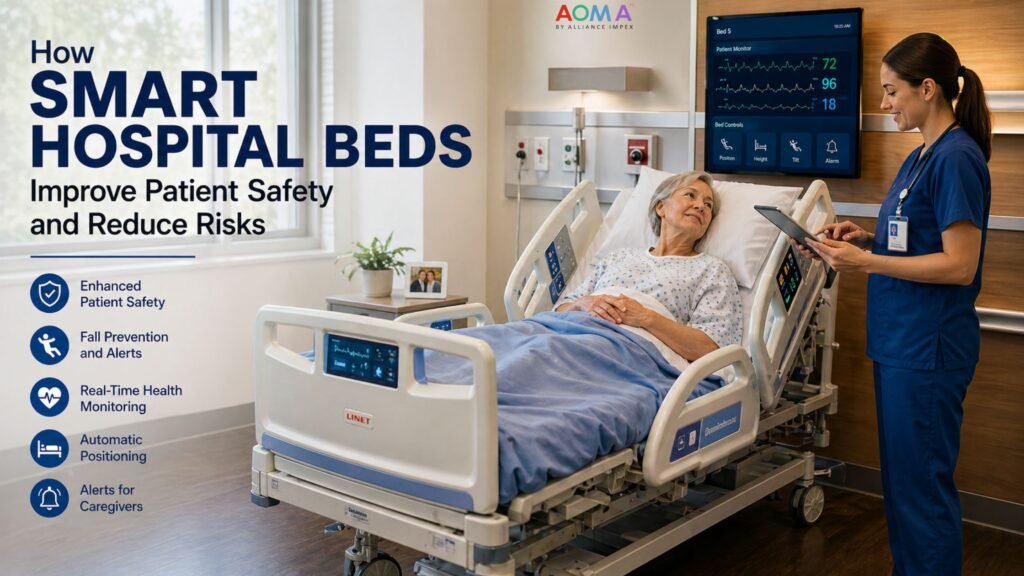
One of the best advantages of Smart Hospital Beds is their ability to detect patient movement. Sensors can monitor if a patient is trying to get out of bed or is in an unsafe position. If something unusual is observed, the system can immediately alert the nurse or caretaker. This helps avoid accidents before they happen.
- Automatic Position Adjustment
Patients who stay in one position for too long can create serious health issues like pressure ulcers. Smart beds solve this problem by allowing automatic or easy position adjustments. This not only boosts comfort but also supports better blood circulation and faster recovery of Patients.
- Side Rail Safety Systems
Falls are one of the most common risks in hospitals. Smart Hospital Beds come with enhanced side rail systems that give better protection. Some beds even have smart rails that can detect when they are not properly secured, increasing safety.
- Integrated Patient Monitoring
Many smart beds are prepared with real-time monitoring systems. They can track vital data like movement, weight distribution, and sometimes even basic health indicators. This reduces the need for constant manual checks and allows healthcare staff to answer quickly when needed.
How Smart Hospital Beds Reduce Risks in Hospitals or Healthcare
One of the best advantages of Smart Hospital Beds is their ability to actively reduce risks. For example, fall prevention becomes much simpler because the bed can detect unusual movement and alert the staff instantly. This allows the caretaker to respond quickly before an accident happens. In the same way, patients who need to stay in bed for long periods benefit from automatic shifting. This helps in reducing pressure on certain areas of the body, which is useful for preventing bedsores.
Smart beds allow patients to easily adjust their position, and hospital and healthcare staff can rely on their automated functions, making patient care simpler and more efficient.
Benefits of Smart Hospital Beds for Hospitals and Patients
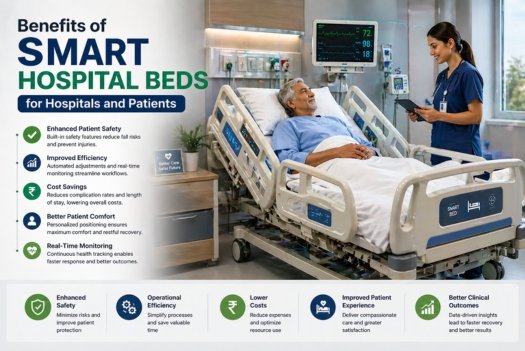
Besides enhancing safety alone, the effect of Smart Hospital Beds changes the hospital environment acutely. These beds make the whole time in the hospital more pleasant for patients and easier for the staff. Patient-wise, smart beds make a difference by giving them comfort and proper support, which in fact is the main factor behind the recovery. When patients are at ease and feel safe, the process of their recovery even becomes less complicated and more rapid.
On the other hand, for hospitals, smart beds become very useful tools that not only get done with manual work like regular patient repositioning or their monitoring but also ultimately cost less due to complications and long hospital stays that are reduced.
Simply put, smart hospital beds provide the best solution for better patient care as well as efficient hospital operations.
Smart ICU Beds vs Traditional Hospital Beds
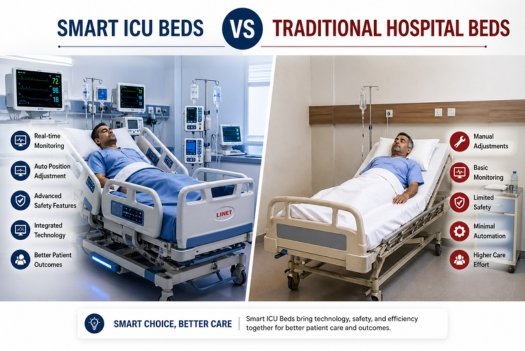
When comparing smart ICU beds with traditional Hospital Beds the difference is quite clear. Traditional beds are limited in functionality and rely intensely on manual effort, while smart beds give advanced features that enhance both safety and comfort.
In critical care environments, where every small detail matters, smart ICU beds provide a major advantage by offering real-time monitoring and automated support. This makes them a much more trustworthy option for modern hospitals.
Why Hospitals Are Shifting to Smart Hospital Beds
The move towards smart hospital beds is not just a trend; it’s a requirement. As healthcare standards continue to rise, hospitals are likely to provide better facilities and enhanced patient care.
Patients today are also more informed and expect modern & Smart solutions that assure their safety and care. At the same time, hospitals need efficient systems that help their staff manage workload without compromising care. Smart Hospital Beds meet all these expectations; that’s why more healthcare facilities are using them as part of their infrastructure.
Choosing the Right Smart Hospital Beds for Your Facility
Moving with the right smart hospital bed is a vital decision for any healthcare facility. It’s not just about technology, but also about stability and usability. Hospitals need to look for beds that have important safety features, that are durable enough for long-term use, and are easy to use.
Selecting a trustworthy manufacturer also plays a major role in assuring quality and long-term performance. A well-chosen smart hospital bed can make an important difference in both patient care and hospital efficiency.
Conclusion
Smart hospital beds transform the style of patient care in hospitals. Integrating technology with features, they not only minimise the risk factors but also boost the sense of well-being, patient recovery, and assist healthcare professionals in their routine work. The healthcare sector is always evolving, and thus, it is inevitable to adopt advanced solutions such as smart hospital beds. Those hospitals that decide to equip themselves with these modern systems will surely be in a position to provide care that is not only safe but also competent and of high quality.
If you are going to make changes to your facility, then smart hospital beds will definitely be a great move in the right direction.
FAQs related to smart hospital beds
Q1: What are smart hospital beds?
Smart hospital beds are advanced beds prepared with sensors and automation to improve patient safety and care.
Q2: How do smart hospital beds improve patient safety?
They reduce risks with features like fall detection, automatic positioning, and real-time alerts.
Q3: Are smart hospital beds worth the investment?
Yes, they help improve patient care and reduce long-term operational costs.
Q4: What features should I look for in smart hospital beds?
Look for sensors, automation, safety rails, and easy-to-use controls.
Q5: Do smart hospital beds help prevent patient falls?
Yes, they include alert systems and safety systems that greatly reduce fall risks.